Friendway tyres for forklifts
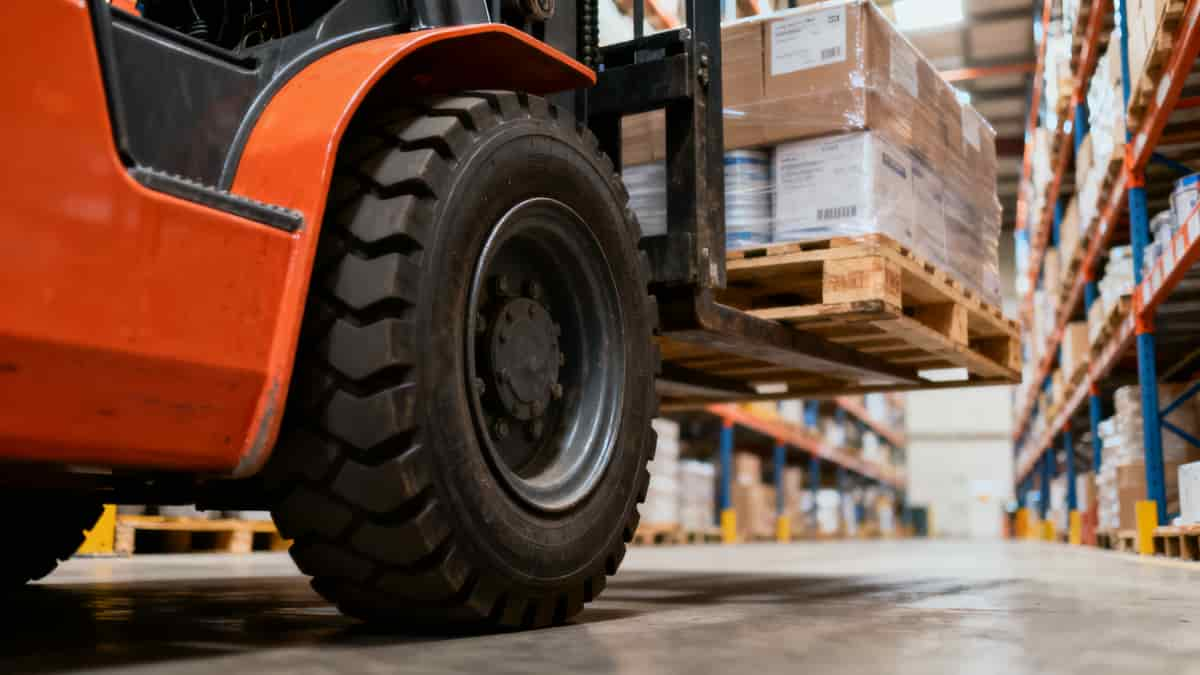
The most basic unit of a forklift are its tyres. They are more than simple rubber rings. Instead, they are engineered to perform. The wrong choice impacts your operation negatively: it can worsen safety, efficiency, and profitability. This guide dives deep on tyres for forklifts so that you can make a well-informed decision to help your operation become its most productive. Your warehouse will become a model of productivity.

The Unbreakable Link: The Importance of tyres for forklifts
Tyres for forklifts are a cornerstone safety and performance system. Movement is affected and their importance goes beyond that. Understanding their importance is the first step and will help you appreciate the value of the correct selection.
The Bedrock of Stability and Safety
The stability of a forklift first starts with its tyres. They make up the stability triangle. This is a key concept in safe lifting operations. The right tyres provide a solid, predictable foundation, enabling operators to lift heavy loads and confidence. Worn or the wrong tyres can lower stability and increase the risk of dangerous tip-over accidents. As a result, risk of dangerous accidents increase. Tyre selection is a primary safety consideration.

Driving Operational Efficiency
Selecting the proper tyres for your fleet is essential for boosting your operational efficiency. They affect how much fuel your vehicles consume, how quickly they complete their routes, and even how long the battery of electric forklifts lasts. Tyres with low rolling resistance extend battery life and reduce the time forklifts spend charging. The right tread pattern enhances traction, reduces wheel spin, wasted energy, and allows forklifts to work even faster and more efficiently.

Impacting the Total Cost of Ownership
Tyres and their maintenance are ongoing, and often, expensive costs. However, purchasing the cheapest option you find is rarely the most cost-effective. Though cheaper durable, high-quality tyres are more expensive, they will result in less maintenance work for you, and your forklifts will have less downtime overall. Also, the right tyres will reduce maintenance on the forklift's drivetrain, and protect your facility's floors. A holistic cost approach will result in the best overall cost benefit.

The Core Technologies: Understanding tyres for forklifts
The variety of forklift tyres is vast, and there are several core types with their own unique purposes and advantages. Knowing the types of forklift tyres and their advantages is crucial in determining the right option for your specific application. Understanding the core types of tyres will help you take advantage of the operational efficiencies they provide.

Air-Filled Comfort (Pneumatic) Tyres (Standard Comfort)
Pneumatic tyres are almost identical as car or truck tyres . For these tyres, creating shock-absorbing, cushioned air- filled tyres is ideal for outdoor as well for multi-piece wheel assemblies where rubber casings are used.
The comfort operator are most productive as the cushioning and the pneumatics absorbs shock- and- vibration from uneven surfaces. A rough gravel or dirt terrain is traversable with ease as the comfort operator are most productive. The air cushioning provides rough
Although, the comfort operator are most productive as the cushioning and the pneumatics absorbs shock and vibration from uneven surfaces. A rough gravel or dirt terrain is traversable with ease as the comfort operator are most productive. The air cushioning provides rough. However, rough cushioning absorption shock are vital for operator comfort. Air filled pneumatics offer the most comfort. However, rough cushioning absorption. A flat pneumatics is with rubber.
Solid Rubber Tires: The Indestructible Workhorse
Most solid rubber tires are used in industrial applications. Most solid tires are used in industrial applications. They are solid and resilient rubber compounds which means there is an air cavity. Consequently, they are the ultimate flat-proof solution.
The primary advantage of solid tires is their incredible durability. They are completely immune to punctures. This single feature eliminates the most common cause of forklift downtime. They are ideal for harsh environments. This includes scrap yards, recycling centers, and construction sites.
Solid tires are typically installed using a powerful hydraulic press. This is also the reason for the name “press-on tires.” The tire is pressed directly onto the forklift's wheel creating an inseparable bond. This results in an extremely tough and reliable wheel assembly. The main drawback is a harsher ride. The solid construction offers very little cushioning for the operator.
Press-On Polyurethane Tires: The Indoor Champion
Most customers use polyurethane tires as a specialized type of press-on. Instead of rubber, they are made from a tough polymer. This makes them ideal for specific indoor applications.
The load capacities that Polyurethane tyres can handle are extremely high. These can support more weight than rubber tyres of an equal size. Also, the tyres have some of the lowest rolling resistances. This means that less energy is required to move them. With the electric forklifts, this translates to an increase in battery life, which can be noticeable.
These tyres are predominantly for indoor use. They perform the best on flat, clean concrete floors. They are a staple for electric warehouse equipment, which includes reach trucks, order pickers, and pallet jacks. They are not made for tough outdoor conditions or rough terrain. They have virtually no cushioning and are not made for rough surfaces.
Non-Marking tyres for forklifts
In some industries, the cleanliness of floors is extremely important. Regular black rubber tyres are made from and contain carbon black. This is the durable part of the rubber, and it can leave black marks on the floor during sharp turns. Manufacturers responded to this need with non-marking tyres that leave no marks.
Non-marking tyres use different rubber and plastic compounds. Instead of carbon black, rubber and plastic behaviour fillers, which are of a light enough color, are used. This is what results in the light, almost white, grey or white rubber. Most importantly, this rubber prevents marks that are embarrassing from being left on floors.
Certain industries have a great need for these types of wheels. As an example, food processing plants cannot afford any black rubber dust contamination. Some other clean environments are pharmaceuticals, electronics manufacturing, and even warehousing. Non-marking tyres are vital in preventing forklifts from making these places dirty. Non-marking tyres can have a slightly shorter lifespan, but their advantages are irreplaceable in such environments.
The Process for Choosing the tyres for forklifts
Choosing the right forklift tyre requires a more strategic approach. First, there should be a realistic appraisal of an operation, and a strategic one at that. There simply cannot be one “best” available tyre suitable for every scenario. This is why the analysis of multiple factors is crucial in ensuring the performance and value of the most suitable tyre selected.
Step 1: Analyze Your Environment
The most important factor to consider is the operating environment. You should think about the surfaces used by the forklifts on a daily basis.

Indoor vs. Outdoor Use
Is the operation entirely indoors, or do the forklifts frequently go outside? Generally, rougher terrains are used outside, making pneumatic tyres or solid pneumatic tyres a more suitable choice. For completely indoor operations on smooth concrete, solid rubber or polyurethane tyres are ideal.
Assess Your Conditions
Look over your floor and ground surfaces. Are they smooth and well-maintained or are they cracked and uneven or covered surfaces with debris? Are there nails, metal shards, or other sharp objects? If so, then no pneumatic tyres.
Assess your Required Cleanliness
If your industry requires clean, non-marking tyres on your forks are your only or simply best option. This is an important point, non-marking tyres are your only or simply best option.
Step 2: Evaluate Load and Weight Capacity
Your load weight is an important consideration. Remember, forklifts have a maximum capacity and their tyres must be able to support that capacity safely. Always check the load rating on any tyre you are considering as it is important. This is often stated on the sidewall. The tyre must be able to meet or exceed your forklifts maximum capacity. If the load is extremely heavy, polyurethane tyres will most likely provide the highest capacity.

Step 3: Assess Operational Intensity
Number of hours your forklifts operate. A single-shift, low-intensity operation differs from a 24/7, high-demand distribution center. That is the defining difference.
Durability matters for high-intensity operations. Solid rubber tyres stand up to multi-shift operations and provide the longest life-cycle. They are resilient to damage and reduce downtime which is vital in high-paced settings. However, for lighter use, cost-sensitive customers might consider pneumatic tyres for their lower initial cost.

Step 4: Pair the Forklift with the Right Tyre
Every type of forklift is designed for specific tyres. Outdoor Internal Combustion (IC) Forklifts use pneumatic tyres. Electric warehouse trucks, such as reach trucks and order pickers, use polyurethane press-on tyres almost exclusively. It is essential to refer to the operator's manual of your forklift. The manufacturer of the fork lift specifies the type and size of tyre that is appropriate for that model. You must not change the model's specifications in any way.

Expert tyres for forklifts Maintenance
Your investment in high-quality tyres requires your attention. You must have a consistent and professional approach to maintenance. This is not optional as it ensures tyre life and operator safety. This is a must in any profession the maintenance is for.
Your First Line of Defense: Daily Pre-Use Inspection
Operators need to start their shift with a walk-around inspection and this simple habit is extremely effective. It can spot a potential problem before a serious hazard occurs.
While completing an inspection, an operator should identify a few important details. Is there anything in the tyre that could cause an issue? Look for deep cuts, cracks, gouges, and anything that is embedded like a rock or piece of metal. Examine solid tyres for signs of "chunking," where large pieces of rubber have been removed. Examine pneumatic tyres for any visible signs of low inflation. Declare any significant damage to the tyre to a supervisor.
Understanding and Respecting the Wear Line
Solid forklift tyres have an important safety line that is often called the "50% wear line." It is commonly marked on the sidewall of the tyre and once the tyre has worn down to this line, it needs to be replaced.
This point onward, risks become greater as the tyres are worn down, and continuing to use tyres in this condition puts the forklift’s lift capacity, stability, and cushioning abilities at risk. This also increases the stress on the operator and the machine, as there are no cushioning abilities. For safe operation, replacing tyres when they reach the wear line is a core principle to be followed.
The Value of Professional Installation
DIY replacement of forklift tyres is certainly not a typical task. On top of the requisite unique and powerful equipment, a hydraulic tyre press is also a must, as tons of force are needed to not only remove press-on tyres but also install new ones. Thus, this must be performed using this safe equipment and not magically hoping to get it done in a DIY fashion.
Let the tyres be replaced by a qualified technician, as they possess the requisite training, tools, and experience, the technician will be able to complete the job and reinstall the tyres so the equipment will work as it was designed to work.
Performance Beyond the Basic Level
For those wanting to achieve peak efficiency, there are other advanced concepts that you may also use to further improve your tyre selection.
Different tyres for forklifts Tread Patterns
There are various forklift tyre tread patterns. A smooth tread pattern is recommended for indoor environments where the conditions are dry. It provides the largest contact patch, and hence the maximum grip. For outdoor and wet conditions, a traction tread with deep lugs is preferred. The lugs are useful in channeling water and for digging into soft ground.
Understanding Tyre Hardness
Tyre hardness, regarding the rubber compound, is quantified by a durometer rating. A harder compound equates to lower rolling resistance and extended distance before wear, but traction is sacrificed. Softer compounds provide better grip, albeit at a cost due to rapid wearing. A proper balance must be achieved to maintain an ideal durometer.

Conclusion
Operationally, tyres for forklifts are an important asset that directly impacts your fleet's overall safety and productivity. A price-based purchasing decision is more about cost and less about value. Assess your surroundings, consider the various tyre technologies, and develop a professional tyre maintenance strategy to improve operational safety, efficiency, and profitability. Your forklifts will be able to perform optimally.
Looking for Factory-Direct Tires for Your Fleet?
Get instant wholesale specifications, custom branding, and mixed-container shipment plans.
Contact Engineering →