2026 No Flat Skid Steer Tires
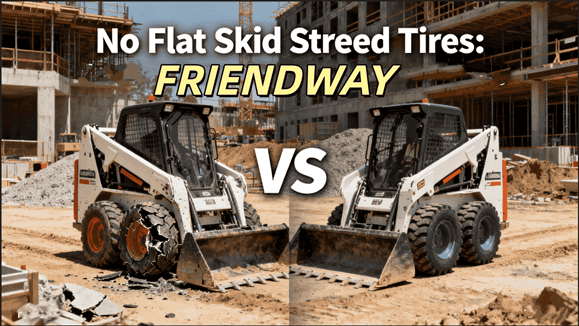
As industry experts, we appreciate the harsh pressure on skid steer loaders. If there is a Swiss knife on a construction site, it is skid steer. They have become a quiet workhorse on a construction site, at a landscaping, during a demolition, or at a farm. As beautiful as the skid steer is, a headache remains a puzzle for both operators and business owners, and that is the flat tire. We have always thought that flat tires are a bad guesswork, as a price we had to pay, and that price surely is undesirable. The horizon for the flat tire, though, is about to change, and change it will. We are heading toward a change in understanding the off-road tires with the new change in technology. This change is exemplified through the no flat skid steer tires. This tire is a tire revolution and this guide is built for businesses that want to move away from the traditional format of business that is expected to save on the operational cost and at the same time increase efficiency. As a business, we will analyze the impact of this tire on the bottom line and will cash in on the value that it gives.
Deflating Consequences of Diesel Tire Neglect on Current Operations
All of us socialized have accepted the weaknesses of pneumatic tires in the most difficult working conditions for too long. They are soft and relatively useful for traction for tires but their addiction to pressurized air makes them easy to puncture, rupture, or deflate with almost anything present on modern job sites. This loss is more than a distraction, it is a profound and often underestimated user of resources, and the bottom line. The loss in operational continuity and project deadlines, profitability and resource availability is staggering.

The Cost Analysis and the Corresponding Operational Impact of a Flat Tire
When a skid steer tire gets flat the consequences are way more dire than that of losing a flat tire. First and foremost, all operations relate to the machine will, simultaneously, come to a halt, and the machine will sit useless. The chain of events that is set in motion is as follows:
- Downtime Losses: The less a skid steer generates revenue, the more every downtime minute is worth. Operators are getting paid to do nothing and that is usually on the higher side of the payscale equating to a loss of potential revenue. Reduced cash flow is never a good thing. Schedules are being missed and that usually means that there is a fine coming because the equipment is being rented longer than needed and labor costs will never go down because of the lost time. All of the tire cost interrupting revenue will always be more than the original investment.
- Hard Work to Repair the Tire: Not one part of the entire tire, be it the wheel rim, valve, tire, or the skid steer that is not heavy and cumbersome to carry. It is not uncommon to try and haul a set of these and lifting gear is even considered. The work environments are, under all circumstances, nothing short of a disaster zone. It is more economical to get the repair done quickly. Skilled labor may be available, but not for long because losing them to sit and repair a tire is losing equipment and labor simultaneously. During these downtimes, operational costs will go up.
The number of pneumatic tire replacements incurred under aggressive conditions is a costly cycle in the procurement process that includes mounting the tire and bringing it back to the depot for disposal. Keeping spare tires stocked adds more complexity and drains the company resources. Inventory control is then added to the whole picture because the company has now incurred both non-productive stock and waste stock. The stark compromise on safety is achingly clear. Similarly, the operator’s fatigue will become more evident during a grueling task that takes much longer to complete because both of the reserving tires become much weaker and then is faulty. The down time needed for the machinery will only make things worse too. The peace of mind that is always protected from a puncture is too fragile and easily broken. The successor of such joy will only be more unnecessary fatigue and stress. Working in these conditions where working with tires is needed is counterproductive. The mind of such ever-present tires grows weaker much more easily and quickly when the work is merited in construction, major demolition or the tires in a waste facility that needs to be managed.

Internal Air Pressure: A Critical System Weakness
The primary user's concern on a pneumatic tires system is the reliance on internal pressure which is extremely vulnerable. The slightest breach in the casing of the tire, be it a penetrating piece of rebar, a sharp nail, uneven concrete, or ripped metal, drastically reduces its structural integrity, results in a system's instantaneous deflation, and complete failure.
Interval Identification
The sidewalls of pneumatic tires that contain internal air pressure, and are designed to provide a greater degree of flex, are usually the most vulnerable parts in a tire. In comparison to the tread area, the sidewalls are much thinner and far less reinforced, which is why they are rudely damaged much easier when they rub against cornering tires, or are pinched by some physical object. In these cases, the tire sidewalls suffer greater loss than the tread area sustaining a puncture.
Air Pressure Changes
Air in tires does tend to fluctuate with temperature as well as other external environmental conditions. A tire that is under inflated is going to have a higher rolling resistance, greater fuel intensive propulsion, a lower load bearing compartment, and greater pace loss. While an over inflated tire is going to have its contact patch lower, traction, and ride comfort. Each of these factors cause rather noticeable impacts, which bring greater ease and comfort to the user. The excessive reliance on tires does dampen performance factors, and lasting value is lost. While puncture proof tires are a recent innovation in traction technology, we are yet to understand on the first try the risks to the economic and safety factors of lasting pneumatic tire failures, which in contrast provide balance to these technologies.
Introducing No Flat Skid Steer Tires: The First Skid Steer Tires Service Smart Engineering
No Flat Skid Steer Tires have radically transformed traditional tires on any skid steer vehicle. The new Noflat Skid Steer Tires have eliminated busted flats by removing the tubes of air from the tires. Its solid structure makes them immune to punctures and variations of pressure, unlike pneumatic tires which burst easily. These tires have been meticulously designed to ensure. Above all else, your skid steers will work with no hassles on any job site. Performance will never be compromised.
The Foundational Principles of Puncture-Proof Technology
No flat tires are designed to not use air pressure. They use innovative designs and new material constructions. No flats tires have a solid structure and can withstand exposure to severe impact or penetration from sharp objects unlike traditional tires which depend on air to hold its shape. New solid materials, dense foam fills, or advanced cushioning designs that can withstand punctures.
Different Types of Architectures of No Flat Skid Steer Tires
The category of no flat skid steer tires is technologically rich and has different design approaches of varying operational requirements and performance choices. We will delve into the most significant types.
1. Skid Steer Tires Made of Solid Rubber: The Most Unbreakable
- Structure and Composition: Solid rubber tires are exactly what the term implies: a single and rigid piece of a special rubber blend. They are often directly molded onto a wheel and sometime napkin rings. Solid tires almost always contain internal aperture designs (strategically placed holes or void sections within the rubber mass) or segmented patterns. These holes serve the purpose of making the tire lighter and the drivetrain less stressed and most importantly, providing a flex and cushion, easing the solid tire's tough ride reputation. The rubber compounds are extremely tough, resistant to cuts, and knicks and wear almost always destroys pneumatic tires.
- Stellar Performance and Durability: The tires are ideal for the toughest tasks. We recommend solid rubber tires for areas with a huge amounts of dangerous and sharp items like scrap yards, demolition locations, recycling plants, waste transfer hubs, and quarrying. In these areas, pneumatic tires risk a 100% chance of a puncture, which is an absolute guarantee. Solid tires, puncture risk tires, with its structure, are more than viable puncture tires: They function normally with no pressure or performance loss, even with a nail or rebar lodged.
- Analysis of Performance Characteristics Tires: The tires pose an unmatched risk of puncture. The tires also pose other issues like machine impact or comfort of the ride. However, modern innovations with optimized internal structures of the tires and custom rubber combinations have significantly advanced modern solid tires. They bring with them smoother rides, with less vibrational transfer to the machines, and the operators. Although the puncture issues, like over filled or foam solid tires, are smoother, the puncture issues are more prevalent. This puncture risk in high-damage areas or machinery, and the Puncture Profit Loss, outweighs the issues of higher fuel consumption.
2. Foam-Filled Skid Steer Tires: The Synergistic Hybrid Solution
- The Hybrid Advantage: Foam-Filled Tires: Hybrid Approach tires are sophisticated innovations. Their described filled structure sustains and defends central cores with the pneumatic evolvement. The stated process entails the assembly of a standard pneumatic tire set and wheel. Next, a valve is injected with a proprietary, two-part liquid polyurethane compound. The liquid undergoes a chemical process and resolves with a definitive expansion–curing into a dense, and resilient elastomeric foam that fills the pneumatic cavity space.
- Optimizing Unrestricted Comfort Puncture Proofing: Foam-filled tires offer puncture protection, and suppress ride quality compromise. Outlined components are: the casing, inflation, and valve system technological integration. Sublayer pneumatic flexibility alleviates tires over defection and cushioning, albeit with more rigidity than solid rubber. Operators experience a more compliant ride with significant reductions operator fatigue, and still are immune to flats. Integral to the tire, cured foam eliminates deflation and slack loss, pressure becomes rise-deflation. The lifespan of foam-filled tires is broad and recommended for operations such as construction where puncture risks posed to tires are high and operator comfort is expected. Typical terrains include construction sites, roads and sometimes in agriculture. A foam-filled tire is simply worn down to its casing which is rubber. The treads do not get used in this case and thus in the case of foam tires, do not get punctured.

3. Polyurethane (Airless) Skid Steer Tires: The Lightweight Advanced Material Option
Airless tires are nothing short of remarkable. They use composites of high-performance polyurethanes instead of rubber which sets them apart from regular tires. Usually, the tires that are polyurethane are complete and come as tire and wheel assemblies. These tires and wheels sometimes have beautiful internal designs and intricate patterns that are designed to flex and absorb airless shocks along spokes.
- Lightweight yet Durable while Improving Agility: One of the main advantages of polyurethane is it’s strength-to-weight ratio. These tires are polyurethane which are lighter than the traditional solid rubber tires and in turn, decreases fuel consumption and enhances the machines agility. The material itself is highly resistant to cuts, tears, and abrasion and is, therefore, highly durable in tough conditions.
- Targeted Specialized Sectors: Polyurethane airless tires are ideal for specific use cases where maximizing the weight savings is crucial. These use cases include the need for extreme durability, comfort, and specific chemical resistance which some polyurethane formulations offer. They shine in construction and in the waste and recycling sectors which require solid performance at lighter operational costs.
The Compelling Benefits of Switching to No Flat Skid Steer Tires
The switch to no flat skid steer tires is not just another, purchase, but a considered piece of strategy which is intended to bring an array of deep benefits to every aspect of your operation. We are able to see these advantages in the form of increased profit, improved safety, and a heightened competitive position in the industry.
1. Unprecedented Uptime and Operational Continuity
- Downtime Events Relating to Tire Issues: The greatest benefit we offer is the complete removal of any tire-related downtimes. Your skid steers will run unceasingly without any disruptions from any punctures or pressure related issues. That means, every hour the operator is being paid, the operator is working and productive, improving the return on investments on both the manpower and the machines.
- Reliable Project Scheduling: Project managers will be able to set and follow much tighter schedules because there is no chance of tire-related delays. This reliability means fewer delays, avoiding costly penalties, and improving client satisfaction and your reputation as a contractor.
2. Substantial and Measurable Cost Savings
- Drastic Reduction in Repair and Replacement Costs: Eliminating the costly cycle of patching, plugging, and replacing punctured tires is the first step we take. This means supporting the cost of new tires as well as materials and services for repair. This is because tires that do not go flat would need to be replaced much less often.
- Optimization of Labor Resources: Skilled operators and maintenance personnel often spend a lot of time trying to fix a flat tire when that time can be better spent. Instead, they can devote their time to more productive, value-adding tasks, which increases operational productivity.
- Improved Fuel Efficiency: While some solid tires are heavier, many no flat solutions, specifically foam-filled options, maintain a consistent footprint, and optimal rolling resistance. No flat tires, unlike under-inflated pneumatic tires, fully contribute to consistent performance which over time translates to real savings on fuel.
- Reduced Inventory Costs: More than stocking non pneumatic tires and dozens of spare tires with a full pneumatic inventory, stocking clutch and booster kits for pneumatic tires is a thing of the past. Pounds of money that would be trapped in surplus stock can now be freed.
3. Elevated Safety Standards and Enhanced Operator Well-being
- Elimination of Blowout Risks: Since no pneumatic tires can blow out, there is no machine control destabilization which wind the risk of severe accidents. No flat tires maintain the safety of ground staff and the operator.
- Consistent Machine Stability and Handling: Open flat tires with no risk of failing air pressure provide a consistent and predictable ground contact patch. Enhanced control and machine confidence, especially when countering heavy loads and rough grounds, is experienced by the operators.
- Reduced Operator Fatigue: Owing to the newer designs, modern solid tires and foam-filled options tires reduces vibrations. This contributes to smooth rides, which improves efficiency and alertness and reduces overall shifts fatigue during long shifts.
4. Positive Environmental Impact
- Decreased Waste: The puncture-proof characteristic of no flat tires, coupled with the increased no flat tire, tires lifespan tremendously diminishes the rate of tire disposals. These actions put forth less waste, which helps with environmentally responsible waste disposal and improves the business’s environmentally friendly reputation.
- Sustainable Resource Management: There is less demand for production of new tires with decreased resource utility. This subsequently improves the overall ecological footprint for business lessens the overall ecological footprint of the operations.

Strategic Selection: Optimum Selection of the No Flat Tire for Your Fleet
To successfully integrate no flat skid steer tires into a fleet, there is a need to engage in a methodical selection process. This process should pair the no flat tires attributes to the specific needs of the operational setting and the equipment used. We recommend a careful tire selection to ensure complete optimization of performance and investment.
1. Detailed Survey of the Area of Operations
- Hazard Profile And Terrain Characterization: First, let’s take a close look at the primary work zones of your skid steers. What is the predominant surface: concrete, asphalt, compacted dirt, or loose gravel? Are there danger zones with sharp, intrusive objects like rebar, nails, glass, or metal shards (as would be the case at a demolition or recycling site)? Or do you deal with softer, more organic debris? The nature and gravity of the threats will determine the level of puncture and cut resistance needed. Solid rubber tires outperform their competitors in the most aggressive and heavily 'hazarded' environments, while polyurethane foam filled or more sophisticated airless tires offer solid protection in a wider range of other less or moderate 'hazarded' environments.
- Surface Uniformity and Abrasiveness: What about the surfaces? Extended operations on aggregates (for example, coarse concrete, rough concrete, or asphalt) will necessitate tires with high durability and wear resistance. Solid and polyurethane tires wear a rubber compound and tread design that is purposely engineered for such conditions.
2. Prioritizing Operator’s Comfort and Machine Integration
With the Padua Policy, we focus on the operator’s comfort first, then, on the machine’s overall configuration. Operators comfort directly reflects on the productivity and retention. If workers require to operate machines under long shifts and the machines have to travel on bumpy surfaces, the need for a smoother ride changes the overall productivity balance. The cushioned and puncture-proof foam-filled tires have the best ride comfort as a trade-off. With the modern trade tires, we have internal designs that offer a greatly improved ride compared to older tires. Under operators shifting and riding comfort of the machines, it is well known that the modern machines can endure a lot of shock and bounce, but rest the tire setting retention is something that can be thought of, for the machine’s overall suspension, axles, and drive. The lightest airless, foam filled tires reduce foam filled machine overstress, particularly the older machines that are prone to wear Apex operators machine tire configurations.
3. Analyzing the Load Requirements and Specifications for the Machine
- Stability and Load Capacity: When considering a no flat tire, make sure that the load rating meets the operational requirements for the skid steer, including the maximum lifting capacities and possible attachments. No flat tires have excellent load stability because they are either solid or foam filled so they do not have the squish or roll that is typical with under-inflated pneumatics.
- Tire Size and Compatibility: As for all no flat tires, the maker’s recommended tire size for a particular skid steer model needs to be followed. While no flat tires boast a wide range of shapes, maximum safety and effectiveness requires proper fitting of the rim (for foam filled tires) or the complete wheel assembly (for a good number of solid and airless options).
4. Primary Budgetary and Return on Investment (ROI) Calculations
- Upfront Cost: The focus will be on no flat tires, which although permit a bigger capital outlay than pneumatic tires, possess a much justified higher value proposition in the long run. When preparing the analysis for the ROI, ensure that the following are included:
- Tire downtime costs incurred are positive with lower downtime costs. Skid steer and operator hourly costs multiplied with losses incurred due to flat intermissions.
- Incurred costs of repair and replacement include tubes due patching plus new pneumatic tires associated with labor.
- Increased no flat lifetime against pneumatic lifetime expectancy ranges saves no flat tires profit.
- Fuel efficiency and savings inconsiderable of minimal improvements due to no flat consistent rolling resistance tires.
- Tire no flat tires lost no operational flat inefficiencies integrates ease to maintenance with operational savings.
Tailored Setup For All-around Effectiveness
- Equipment for Solids and Airless: The installation of many solid and airless polyurethane tires is simplified because they are offered as a wheel and tire assembly. However, solid tires mounted on bare rims require strong hydraulic presses, rarely found outside a heavy equipment tire service center. The processes for mounting solid tires on rims and for mounting solid tires on rims and tires being improperly mounted can result in severe damage.
- Foam Filling Services: With tires that are foam-filled, they require technicians specializing in closed cell polyurethane foam systems, in order to ensure the tire is filled uniformly, and that there is optimal performance after curing. For specialist providers of foam-filled polyurethane tires, the processes and systems are best fulfilled.
Reduced Ongoing Maintenance Considerations
- Management of Air Pressure Elimination: The elimination of the need for air pressure relief is the biggest reduction in maintenance, as it saves time that would otherwise be spent on pressure checking, and fixing under inflation, and performance with improper inflation.
- Routine Visual Inspections: Although flat tires have no issues, they also benefit from visual inspections from operators for chunking, deep cuts, excessive wear, and other issues that indicate more serious mechanical issues with the skid steer. These issues should be addressed ASAP in order to save the tires lifespan.
- Washing tires that are exposed to corrosive and sticky materials and are washing helps to slow down the adhesion, and saves time for the visual check. The spare no flat tires should be kept in a storage area that is cool and dry, and kept away from sunlight and other hazardous materials to preserve the materials for as long as possible.

Dispelling Common Misconceptions About No Flat Skid Steer Tires
Like with virtually every other transformative invention, flat no skid steer tires face some false narratives despite their growing popularity and the benefits that they bring. We confront these misconceptions headfirst to help shed the light that they need in order to make educated decisions regarding their use.
Misconception 1: "No Flat Tires Are Just Too Expensive for my Budget"
Our Rebuttal: This viewpoint is totally wrong because it ignores the concept of the total cost of ownership. While the starting costs of no flat tires is more steep than the simple pneumatic options, it is needed to figure in the cost of operating pneumatic tires in the tougher environments. When repairs and replacements, downtime of the operator, delays in the project, and all the needed admin work are taken into consideration, the no flat tire option is the best decision in terms of ROI and total ownership costs. The phrase "penny wise and pound foolish" summarizes the viewpoint best on the idea of spending most of the money on the first in order to save out on in the future.
Misconception 2: “They’ll hurt my machine’s suspension and provide a jarring ride.”
Our Rebuttal: A lot of this misinformation seems to be a product of the first generation of solid tires. The new technologies on solid ‘no-flat tires’ have greatly solved this. Modern solid tires employ micrometric internal designs with features to shock absorb and flexible rubber constituents that ameliorate shock attenuation. However, foam-filled tires tend to be flexible because of the structure of the pneumatic casing, and so the ride is better than well-inflated pneumatics. In addition, new skid steer loaders have superlative suspension systems with large chassis designed and built to endure the toughest working environments. Therefore, we confidently opine that with the correct type of no-flat tire, the matched application will provide an at least equally acceptable operator experience at no excess component stress from the machine.
Misunderstanding 3: “No flat tires have less grip on the ground than pneumatic tires.”
Our Response: This is another completely false myth. The design of the tread, the rubber used, and the amount of tire on the ground determines how much grip a tire has. Manufacturers of no flat tires pay attention to aggressive tread design and specific rubber or polyurethane compounds for excellent grip on dirt, mud, gravel, and asphalt. The unchanging and rigid character of no flat tires can offer much more controlled and stable traction than a pneumatic tire on deflation or under heavy loads during sharp turns maneuvers. The contact patch always remains constant during deflation, which is above more than a deflating pneumatic tire and neck breaking a deflating tire.
The Future Outlook: Continuous Innovation in Puncture-Proof Technology
The expected developments for the no flat skid steer tires line revolve around constant improvement and innovation. There will be additional developments in the coming years that will fundamentally change the operator experience and the durability and performance of these products. The field of material science may lead to the production of better and even lighter tires which might also be 'smarter.' These 'smarter tires' could have integrated sensors that provide real time information on operational wear and predictive maintenance. The focus continues to be the development of a tire that is totally flat proof and no other solution is acceptable. Any solution must also be flexible enough to be integrated into any workflow tire systems used in today’s industries and provide no compromise on operational efficiency or comfort.
Conclusion: Flat-Proof Operations: The Inevitable Change
Having no flat skid steer tires is much more beneficial than the alternatives. The costs associated with pneumatic tire failures is no longer acceptable. We no longer need to deal with the associated downtime, repair costs, safety issues, and the level of productivity. There are many advanced and reliable no flat solutions available today. These solid rubber tires, foam filled tires, and polyurethane airless tires are all high-tech alternatives to traditional tires.
We revolutionized operations by making investments in innovative tire systems which enabled companies to attain an exceptional standard of operational efficiency and cost benefits, while also enhancing the safety and comfort of operators, which is a part of the added value of CSR in today's world. This is not an added feature, but a core operational philosophy which ensures uninterrupted productivity and enhanced durability for skid steer fleets. The new standard continues to be untouched and flat proofing, and it is safe to say that we have changed the requirement of these industries. It is in this aspect that we urge people to adjust to these changes for operational benefits and to the a better operational, legislative, economical and service control for the sustainable growth of the business and it’s core activities.

FAQs
What is the cost of no-flat skid steer tires versus other tires?
No-flat skid steer tires are typically more expensive than pneumatic tires, however, the long term cost of loss minimization, downtime, and operational cost is far cheaper than the no flat tires. Depending on the type, size, and model of the solid, foam filled, or polyurethane tires, they may make a dent on the operational cost AND cost more than 1.5 and 3 times of the no-flat tires.
Do no flat tires make a difference in comfort while skidding?
Many people believe that solid, old generation tires are far harsh to be used, however, the no-flat options are a far improved version of comfort tires, owing to modern technologies that let them accumulate new rubber compounds. Bottom line is that, foam filled tires with some flex, and Polyurethane tires are used to puncture proof tires. Comfort, while skidding with no-flat tires, is largely governed by the tires used and suspension available with the device Machine skids.
What is the average lifespan of a solid or and foam skid steer tire?
Every tire has a different lifespan depending on the enviroment, the use the machine gets, and the tire type and ready construction. Under very rough conditions, solid and foam filled tires can last between 1000 to 2000 hours and even more while pneumatic tires can last a few hundred or even less. The failure mainly comes from tread wear rather than from puncture. Hence, they outlast several sets of pneumatic tires under harsh conditions.
What many businesses do is replace pneumatic tires with foam filled tires. Can I do the same?
Of course! This is a very popular method. It enables tires to use preexisting pneumatic casings and wheel rims. Through a valve stem hole ( or a drilled hole), polyurethane foam is injected and rests to undergo the curing process where the tire gets transformed. It gets solidified and the puncture free characteristic is strengthened while maintaining the tread of the original tire.
Are there still cases where pneumatic tires are being used as opposed to no-flat tires?
While no-flat tires are advantageous, pneumatic tires have there advantages too thus can be used in very simple cases. For example, in case a skid steer works only on very smooth paved surfaces and never leaves them, then the advantages of a smoother ride and lower price rubber tires would be preferred. However, no-flat tires are so much more useful in any application where there is rough terrain, debris, or a high risk of punctures - which is just about every case. any more questions contact us whatsapp
Looking for Factory-Direct Tires for Your Fleet?
Get instant wholesale specifications, custom branding, and mixed-container shipment plans.
Contact Engineering →