2026 Professional’s Guide on 14x17.5 Backhoe Tires
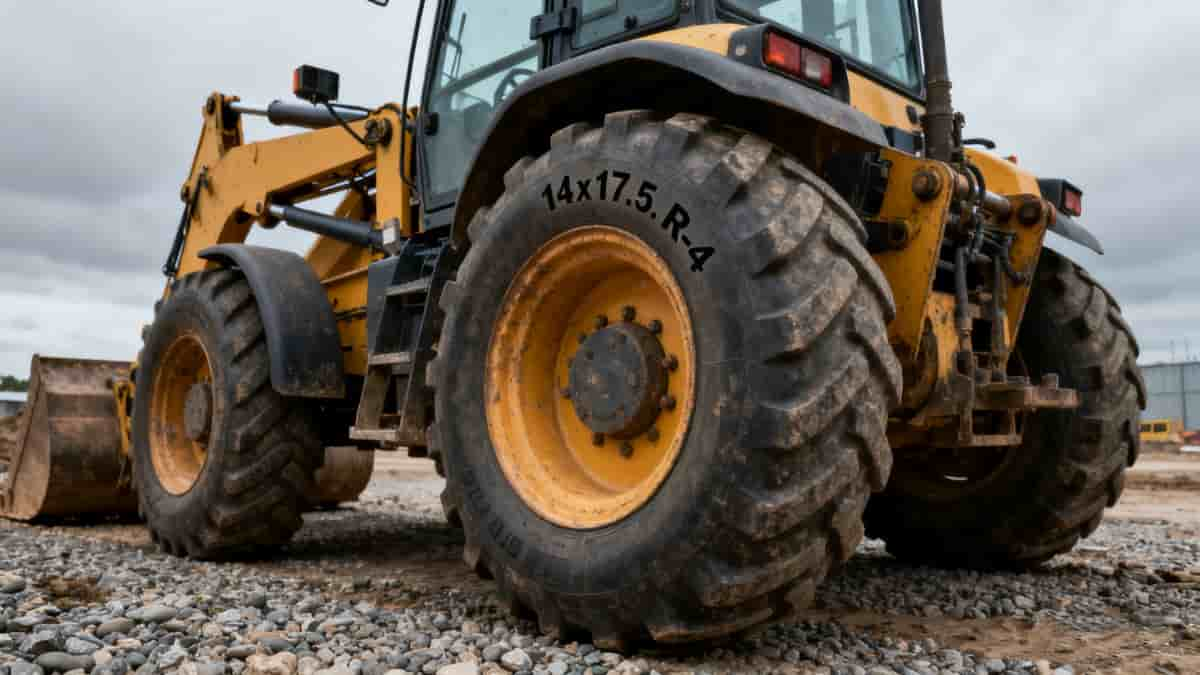
The Silent Workhorse: A Primer on the 14x17.5 Backhoe Tires facebook linkedin
The effectiveness of your piece of heavy machinery depends on its tires. Hence, the construction industry is ever-growing and versatile. With that being said, the 14x17.5 Backhoe tires is an especially important one. The specific size is a common and critical fitment. As a result, it is used on the front axle of large backhoe loaders and on all four wheels of many skid steers. Backhoe loaders also put it on the front axle. Its robust design is built to withstand extreme stress and demanding tasks. In addition, it offers the absolutely critical stability that is crucial for heavy lifting, complexity of maneuvers and precision control. Conversely, it is equally crucial to note that going for the wrong choice in this tire size is a costly blunder. With the wrong choice, the machine suffers from rapid tire wear, reduced performance and severe safety issues. This 14x17.5 tire guide is far-reaching in scope, and will shed light on all aspects of the tire. Ensuring that the all of the equipment that the tier is being used on is protected and maximized in performance will only serve to strengthen the investment. Job site success, after all, can only be derived from the ground up.

Interpreting the Numbers: What 14x17.5 Means Specifically
The series of numbers on the sidewall of a tire shows the tire's identification. You need to know this identification to match the tire correctly to your machine. Thus, each number in the designation 14x17.5 has a meaning. The first number, 14, indicates the nominal section width of the tire in inches. This is the distance across the sidewalls at the widest section of the sidewalls. The greater this width, the greater the footprint, thus the better balance and stability. Also, the second number, 17.5, shows the size of the wheel rim in inches. This tire is specifically meant to be fitted on a 17.5 inch rim. This size is popular among equipment manufacturers because of the good balance of load and maneuverability. On the other hand, do not attempt to fit a tire that is not of the specified size on the machine's rims. The results could be disastrous in terms of machine and equipment damage. Always adhere to the specifications provided by the manufacturer.
Toughness as a Measuring Concept: Ply Rating and Load Index
With a distinguished measurement of the 14x17.5 tire being an important attribute. As such, the tire's strengths are protective due to the capacity to endure punishment as defined by the ply rating. The ply rating is an astounding measure as it features a standard set of measurements, which relates to the tire’s ability to carry a specific load and resist punctures. Given its heavy-duty applications, this tire size does, indeed, boast high ply ratings. You may find options such as 10 ply, 12, and even 14 ply carried in stores. Also worth noting is the fact that a higher ply rating correlates to a stronger tire casing that is tougher, more resilient, and therefore, more capable of sharp debris and extreme pressure lifting. On the other hand, lower ply rating tires are more than likely insufficient for extreme construction work. In order to determine the exact tire load capacity, you must refer to the tire’s specific Load Index. The Index is marked by a numerical code and is the tire's maximum limit weight that should not be exceeded.
The Internal Architecture: Bias Ply and Radial Construction
The tire's uses or workability features are primarily dependant on its internal construction. You face a choice of the classic bias ply, or the more modern radial design – which is more strategic.
The Rugged and Resilient Bias-Ply Tire
For decades, construction methods of bias-ply tires have maintained a traditional and straightforward approach with plies of fabric cords laid diagonally from bead to bead. When called upon, this design yields a single construct of overwhelming toughness. Residuals from the tension created in the process locks the tread and the sidewalls together resulting in reinforced stiffness. Such a design, therefore, resists cuts and impacts on the sidewalls most effectively, which is why it is preferred in demolition and brutal abrasive environments, as well as in rock quarries. Moreover, bias-ply tires tend to charge lower prices. Their construction mechanism, albeit, creates a more rigid structure which in turn generates more heat, therefore limiting road speed, and accelerating tread wear.
The 14R17.5 Radial Tires Advantageous Performance
Radial tires as phonated with the ‘R’ suffix are tires that are classified as a technological miracle. The body cords are perpendicular to the bead and run straight across, to which a succession of sturdy steel belts are applied flat under the knit of the tread. This construction permits the sidewall and tread to act independently of each other. As a result, radial tires are able to maintain a constant and larger patch of contact with the ground. This contact patch greatly reduces soil compaction, increases traction, and increases tread life. Moreover, radial tires operate much cooler and at greater speeds with increased fuel efficiency. The operator also enjoys increased ride comfort. On the other hand, flexible sidewalls are more prone to harsh impact damage.
Tread Patterns: Designed for Specific Tasks and Surfaces
Tire tread is the working part of the tire. The 14x17.5 size comes in a variety of specific designed patterns for certain functions.
The Versatile Champion: R-4 Industrial Tread
As an all-around performer for backhoes, its exceptional design serves to balance machines working on a variety of surface types. The R-4 pattern has wide, segmented, blocky, mildly deep lugs. This design allows for effective dirt and gravel traction while remaining mild on pavement. The pattern is also designed to self-clean, even in muddy conditions. More importantly, it self-provisions grip in mud. The stability and wear properties also make it wildly popular as a front-axle tire.
The Extreme Duty Tread: L-4 and L-5 Rock Service Patterns
The L-4 and L-5 patterns for rock, quarries, and demolition feature extra-deep tread depth. Like all treads designed for high wear applications, these come with a lot of wearable rubber for an extremely long life in abrasive conditions. Treads designed for extreme conditions need to feature rubber compounds that are resistant to cutting and chipping. Furthermore, these treads all feature a high lug-to-void ratio. This means a low space to surface area ratio, which is optimal for stability and resistance to punctures. In direct comparison to an R-4, these patterns lack traction in soft mud.
The Skid Steer Specialist: SKS Tread Designs
The 14x17.5 size is very common on skid steer loaders and thus, you will find SKS specific treads. These treads are designed to endure the unique skid steer operating stresses. Skid steers perform harsh, pivoting turns that rapidly scrub away rubber. Thus, SKS treads have extra deep lugs and heavily reinforced sidewalls. These treads also almost always have a pronounced rim guard that protects the wheel. Additionally, these are the toughest tires available for this size and can be fitted on the backhoe front axle for increased durability.

The Ultimate in Reliability: Airless 14x17.5 Backhoe Tires Solutions
In many industrial environments, a flat tire is not merely a nuisance. Flat tires in these cases are a significant source of productivity and revenue loss. In such cases, airless or non-pneumatic tires provide a revolutionary solution.
The Indestructible Solid Cushion Tire
Solid tires are the final word in flat-proof technology. They are made from 100 percent solid rubber compounds. Thus, there is no air chamber available which can be punctured. They can be driven over rebar, scrap metal, and any other sharp debris without failing. Moreover, they provide an astonishingly long service life which is many times longer than pneumatic tires. They are the standard choice in scrap yards and waste transfer stations. On the other hand, they are extremely heavy and provide an extremely harsh ride.
The Proven Flat-Proofing Method: Foam Filling
Foam filling is a common method employed to render a conventional 14x17.5 tire immune to flats. The process involves filling a standard pneumatic casing with a liquid polyurethane which eventually cures into a solid but flexible core. As such, the tire is incapable of losing any pressure whatsoever. It is also clinically proven that the ride is cushioned more than solid tires, however, the weight added to the wheel assembly is considerably more.

Modern Airless Designs: The Aperture Tire
A more modern design for airless tires uses an aperture or honeycomb structure. These tires have geometric sidewall openings engineered to compress and absorb impacts. As a result, they provide pneumatic-like cushioning, without puncture risk, and generally have a lower weight than solid or foam-filled alternatives.
Top Leading Brands and Manufacturers of 14x17.5 Backhoe Tires
With investment in a quality brand comes a guarantee of superior engineering and materials.
Global Premium Leaders: Goodyear, Michelin, and Bridgestone
These brands remain on the edge of tire technology. Their 14x17.5 tires incorporate the most modern construction techniques and rubber compounds. They aim for the most favorable total cost of ownership through dependable longevity, earning them a premium market price, in turn. Their performance, however, is exceptional.
High-Value High Performance Brands: BKT, Titan, and Alliance
These manufacturers have developed a positive global image. They offer quality and long-lasting tires at a competitive price. As a result, they have become very much favored by fleet managers and owner-operators. This is due to the optimum value and performance they provide. At the same time, their varied product lines provide an extensive selection of tread patterns and ply ratings.
Reliable and Established Brands: Friendway, Carlisle, Deestone
In the industry, these brands are well known for their quality tire production and engineering for many years. They have reliable designs and quality. They are a good option for a variety of uses. This sets them as reliable options for economical buyers, optimistic that they will deliver the quality that truly matters.
The Golden Rule: Proper Tire Inflation is Critical
Almost for every tire, especially the pneumatic ones, maintenance is an essential component. It influences the safety, balance, and life of the tire. Under-inflation is the most common reason for tire injuries and failures. The ability of the tire to flex is highly restricted, which heats the tire up to levels that damage most of the tire's interior. This, in turn, causes the edges of the tire to wear and the treads to juxtapose. Conversely, over-inflation (anything above the recommended tire pressure) is intolerable and will inflict damage to the tire's surface. The stability, softness, and safety zones of the tire's surface are compromised under excess pressure. Therefore, use a quality gauge, check the tire's pressure daily, and clean the tires regularly. Always target the OEM recommended cold tire pressure.
A Professional's Guide to Maintenance and Maximizing Tire Life
Disciplined, protective and routine maintenance will maximize service hours obtained from your 14x17.5 tire investment.
The Daily Walk-Around Inspection
Each staff member should conduct a thorough visual inspection prior to every shift. Spend time training interns on tire inspection, starting with the sidewalls. The tire must be removed from service if there is any damage such as cuts, cracks, or bulging. Furthermore, tread must be checked rigorously for embedded stones, nails, or other sharp debris to avoid slow or unexplained damage.
The Operator's Critical Role
The operator’s practices have a direct impact on tire wear. Aggressive habits are costly for any organization. Sharp, fast turns and wheel spinning increase tire destruction significantly. Proper training on tire-friendly operation of equipment will reduce unnecessary wear.
Total Cost of Ownership (TCO): Looking Beyond Initial Price
The cheapest tire option is rarely the best deal. Wise business practitioners consider tire purchases in the context of Total Cost of Ownership (TCO). TCO is a holistic metric that calculates the tire’s cost per hour over its useful life. A tire that deteriorates quickly will have a high TCO, while a durable premium tire will have a lower TCO over time. The exorbitant cost of machinery downtime is also a key consideration. Investing in quality and durability is the more profitable option in the long run.
Proper Installation: Completing Your Investment
Tires require careful attention during installation. Heavy-duty tires should be mounted by a professional, as they have the necessary equipment and safety cages to do the task properly. This also ensures the steel tire rims remain in pristine condition. Prior to installing a new tire, the rim should be thoroughly checked. It must be free of cracks, rust, and any other form of damage. A damaged rim may lead to improper tire sealing, which can damage the bead of the new tire and cause it to fail.
Implementing the Strategy for 14x17.5 Backhoe Tires
The 14x17.5 tire plays a vital role in the success of your machine. Your selection process must be thorough, researched, and calculated. Pick the tire construction and tread pattern that best corresponds to your primary workplace. Choose a ply rating that covers a safe margin for your most demanding tasks. Purchase from a trustworthy manufacturer to ensure product quality and durability. Keep in mind that no tire, regardless of quality, can escape the repercussions of poor maintenance. Correctly inflated tires offer far more advantages than deflated ones. With this professional approach, you are channeling resources to maximize productivity, safety, and profit through your equipment. want to know our prices , contact us now
#14x17.5 Backhoe Tires #14x17.5 Backhoe Tire#14x17.5 Backhoe Tyres#14x17.5 Backhoe tyre# 14-17.5 Backhoe Tires#14-17.5 Backhoe Tyre# 14x17.5 Tires#14x17.5 Tyres #
Looking for Factory-Direct Tires for Your Fleet?
Get instant wholesale specifications, custom branding, and mixed-container shipment plans.
Contact Engineering →