Everything You Need To Know About Solid Rubber Forklift Tires: Improving Durability and Performance
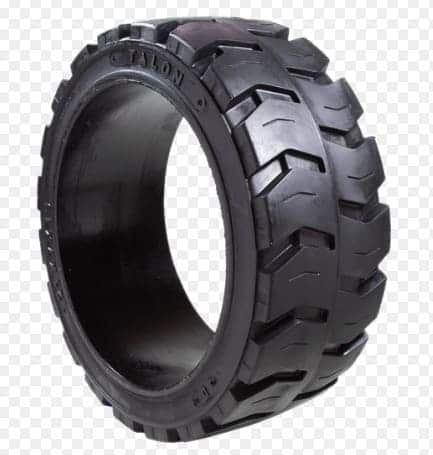
In the challenging field of materials handling, business efficiency and safety are the two most crucial aspects. A dependable forklift truck has tires that are foundational to the balance and productivity of the loader. The solid rubber forklift tires are the most durable and resilient. The tires are designed to perform well in the most demanding industrial areas with a solution designed to minimize downtime through puncture circulation.
We will provide specific areas where solid rubber tires are the best. Other types of tires will also be discussed and tire construction will be a highlighted topic. Solid rubber tires along with tire maintenance will be analyzed along with expert impression. Success in operation comes with full understanding of these tires and the performance and reliability of the operation.
The Foundation of a Solid Rubber Tire: Why Stronger is Better
A solid rubber tire is described very simply as a tire made of solid rubber – and that is exactly what it is: a compound of solid rubber in every part of the tire. Unlike any other types of tires, solid rubber tires lack air, which is one of the most advantageous features of these tires. Solid rubber tires sustain zero damages from common hazards in distributing centers and manufacturing plants, which includes cuts, punctures, and flats.
Constructing the tires requires curing several layers of specially designed rubber compounds in the form of tire solid on a primary steel band or rim. Advanced technology in construction and engineering is used to apply sufficient heating and pressing, which fuses the rubber into a single, incredibly dense unit. Rubber composition is a very important part of manufacturing solid rubber tires, and so manufacturers blend synthetic and natural rubber with other components to achieve desirable features. Resistance to wear, tears, and other chemicals is tailored to the specific industrial hardships. Such manufacturing objectives as durability and a long operational lifespan are met where tires sustain pneumatic tires by a long margin.
Press-On vs On-Site: Understanding The Two Halves of Solid Tires
All solid tires enjoy the common advantage of being puncture-proof. However, we can differentiate two categories: press-on cushion tires and solid pneumatic tires. The type of tire one chooses is mainly dictated by the fork lift design and the type of environment it operates on.
The Profile of Press-On Cushion Tires
Press-on solid tires or cushion tires are rather simple in design: They comprise a solid rubber tread that is directly glued onto a steel band. After which, we press-fit the unit on to the fork lift’s wheel hub. As a result, the diameter is much smaller than that of pneumatic tires.
The greatest benefit brought about by the low-profile design is the increased stability it affords. This is because the center of gravity of the forklift is lower with press-on tires. The press-on tires also reduce sway which makes them the ideal choice for high-stacking warehouse applications. They are also smaller in diameter which aids the tighter turning radius needed when navigating the narrow columns in modern storage facilities. These tires are used mainly indoors on dry, smooth surfaces such as polished concrete floors or asphalt. Their solid construction is durable but offers little cushioning which makes them unsuitable on uneven and rough surfaces where the cushioning is needed the most.

The solid pneumatic tires
also referred to as resilient tires, combine the best of durability with the best of adaptability. They are engineered to mount on the same wheel rims fitted with standard air-filled pneumatic tires which makes them a direct puncture-proof substitute. They are manufactured with solid rubber but have a cushion, which press on tires do not have, because the core is softer or there are purposely made openings in the sidewall.
This style increases the utility of solid pneumatic tires. They provide the necessary robust performance for challenging indoor and outdoor application and are puncture-proof. For example, we observe their advantages while working in recycling centers, lumber yards, and construction sites, which are rife with debris and the threat of flat tires, making air-filled tires useless. They are the best option for semi-developed grounds because the operator, load, and the mechanical components of the forklift are sufficiently protected. They happen to be more valuable for the case in which the fork-lift has to travel indoors and onto the yard outside.

The important benefits of using solid rubber tires
The solid rubber forklift tires has to be the best option for all fleets. The reason why is because it is designed with operational advantages in mind. This is apparent why it enhances the safety levels, and increases productivity as well as being the more cost effective solution for improving material handling.
Unmatched Resilience and Longevity
The strongest aspect is the durability and the ability to withstand serious damage. The sheer construction makes it impossible to be penetrated by nails, glass and sharp metallic and screw fragments which would maliciously cripple any pneumatic wheel. Being damage proof means a faster and longer service. In extreme and dangerous terrain, it has been proven that solid tires last three to four times longer than inflated tires. The profit when investing is astonishing!
Elimination of Dependable Downtime
A flat tire on a fork lift comes with a repair cost which is not the worst, Fork lift tires come with the worst flat tire that comes with the biggest penalty. The whole tedious and slow computer work stops which leads the production balance to fall off the record, which leads to wasted dollars on not only the fork lift repair, but on the useless computational work as well. Because of solid tires, this noise of operational interruption is completely silenced. This is very crucial when working in fast moving industries where every dollar counts. Not knowing that your fleet is working makes your level of productivity drop to the max.
Improved Stability and Safety
The main features of solid tires enhance stability since they are rigid and unyielding. There are no air sidewalls to fluctuate, nor is there any side wall flex, which is likely to cause sway, especially in cornering and elevating heavily laden forks. This stability lowers the probability of tip-over accidents, which is a safety plus. To operators working with valuable and breakable cargo, a solid platform enables them to place materials with precision and rest assured of their stability.
Lower Maintenance Costs
The maintenance schedule for solid rubber tires used on forklifts is, compared to others, much more relaxed. Spend less time and money on daily maintenance tasks since there are no air pressure checks, no slow leaks to worry about, and no need to keep spare inner tubes or repair kits handy. Maintenance is now reduced to merely wearing and tearing visual inspections. Delegating more remedial tasks to maintenance technicians lowers the overall costs of fleet maintenance.
Buying the Appropriate Solid Rubber Tire for Your Usage
There is no universal answer to which solid tire is best suited to a particular application. We recommend a more in-depth analysis of your operational requirements. This enables you to select a tire that provides the best value in terms of performance.
Carrying out a detailed assessment of the environment is the first step of the process. Know what factors we expect our clients to be mindful of:
Surface Conditions: What is the envisioned floor the forklift will be operating on, is it smooth indoor concrete, or will it be outside on the raw gravel, asphalt, or dirt? For the smooth surfaces, we are saying press on cushion tires are perfect, and for the rough surfaces, the versatility which is solid pneumatics is what we are saying is needed.
Debris and Hazards: What is the puncture risk? A clean floor within a warehouse may be considered to have minimal risks, but a metal fabrication plant or demolition site poses a clear and present danger. The solid tires in those cases are more advisable.
Chemical and Oil Exposure: Will the tires be operated on being mode of contact on, oils, solvents, or any other chemicals? If yes, we advise a tire with the rubber compound specialized to be chemical resistant formed so the wear and tear come late in the process.
Matching Tread Patterns To Surface Demands
The tread pattern on solid tires plays a critical role in terms of lifespan and grip. For this reason, we have developed two primary options.
Smooth Tread Solid Tires: Tires of this type have a completely flat tread and as a result, we advise their utilization solely on dry, closed areas with smooth pavements. This is because these solid tires have a large contact patch which aids in grip and does not wear out, hence maximizing the service life in these extreme conditions.
Traction Tread Solid Tires: These solid tires have inaccessible blocks and allow the tires to have proper grip on diffcult terrains due to the traction aided by the tread. This type of tire works well in waters and slack on open terrains. If you intend to use slack or smooth slip terrains, we advise the usage of traction tread solid tires.

Maintaining Machine Capability and Load Specifications
Forklift solid rubber tires have more than 30 load capacities with an associated solid rubber tire, and each of these need to match of the lift’s specification to not be overloaded. Also included in the max load estimate for the tire and the lift is the lift’s weight and the heaviest load the vertical lift can carry. It is a catastrophic risk if the tire is overloaded. We guarantee that the OEM recommendations on sizing and load rating are met.
Best Practices for Maintaining Solid Tires
Continued safe operations and premature wear can be avoided by the practices of instituting a culture of proactive care. It is true that solid rubber tires are the most low maintenance in the tire industry, but they are the most will get the most service life out of their investment.
Regular Inspections and What to Look For
Part of the quick visual inspection that a forklift operator performs is the chunking and tearing.What to Look For:
Check the tires for Flat Spotting. Look for signs of aggressive braking through misalignment or uneven wear. Flat spotting leads to an unhealthy, uneven, and troubling ride.
Check the Bonding Integrity. For tires that are press-on, check where the rubber connects to the steel band. Any mechanical failure, meaning rubber and the rest of the string, is a complete failure.
Check the Wear Level. Every solid tire has a wear indicator, called the wear band, or another area of the tire where the tire has imprinted information. This print is the point that tire should be changed, as the impedance to the load has lost complete cushioning capacity.
Conditioning the Surrounding Environment
Although solid tires are extremely durable, cleaning the environment beneath the tires boosts durability as well. Abrasive materials, sharp debris, and metal shavings contribute to slices and cuts, as well as rapid depletion of the tires. Simple measures, such as this, will lead to a decrease in the depletion of the tires.
Installation and Replacement
There is no way around it, replacing solid forklift tires is a task that can not be completed without the help of trained professionals. Having access to a hydraulic press is necessary, and so is a technician, as the tire needs to be mounted in a safe manner, which is no simple task. The type of tires that require the most force in order for them to be set properly onto the wheel tire is the 'press on' version. We will always recommend having the tires installed by a professional, as it helps guarantee proper functionality and safety. Wheel malfunctions and tire issues are the result of not having the job done by a certified professional.
To summarize
solid rubber forklift tires are an important, reliable, and efficient part of your material handling fleet. Durable construction, coupled with a puncture-proof design helps avoid unwanted downtime and low productivity. With the right environment, type of tire, and tread, any amount of performance can be achieved. We are confident that with consistent maintenance and proper selection, your business will be kept on the move, safe, and productive for many years to come.
Contact us for more information on forklift tires. Pinterest

Looking for Factory-Direct Tires for Your Fleet?
Get instant wholesale specifications, custom branding, and mixed-container shipment plans.
Contact Engineering →