You should know when to replace foklift tires?
replace foklift tires
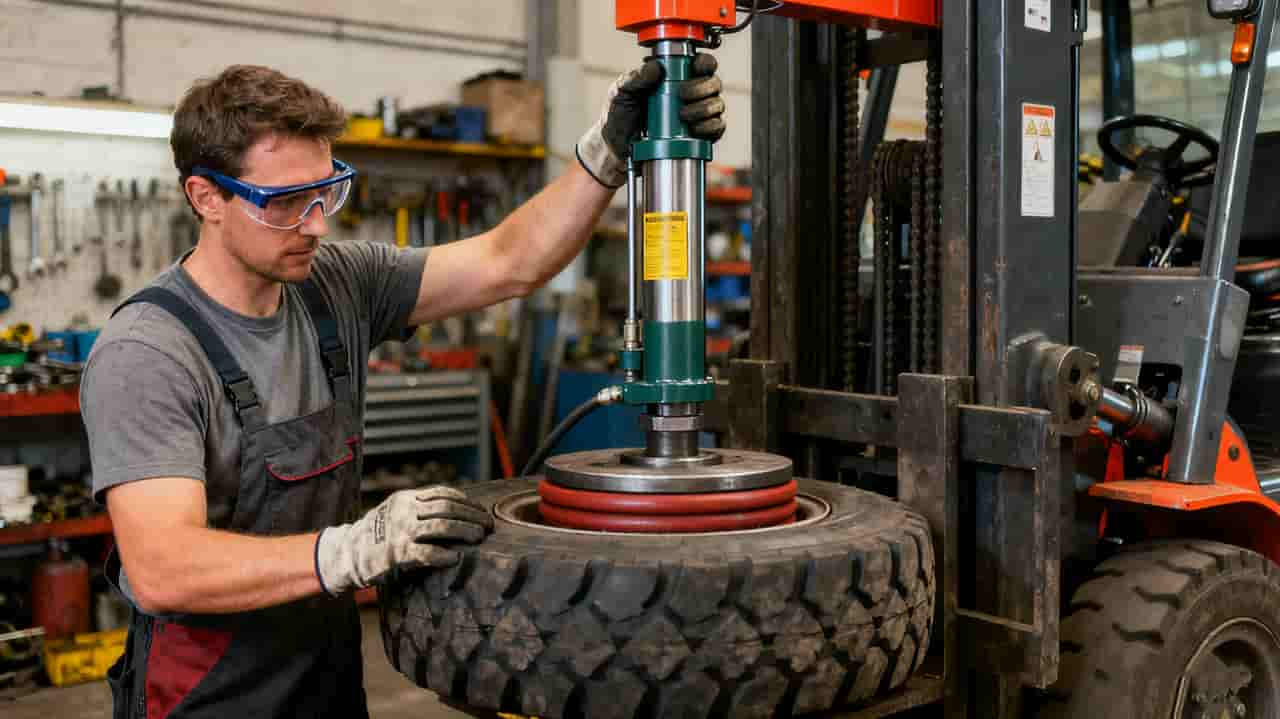
The operational readiness and safety of your fleet of forklifts are crucial. Attention to maintenance on the engines, hydraulics, and masts take priority, but the importance of the forklift tires is almost always underestimated. Forklift tires are not “just black and round” parts, they are the only contact point a multi-ton machine and its very precious load has with the earth. Forklifts are not fitted with the conventional kind of suspension, therefore, the tires are meant to provide the ultimate balance: Stability, brake control, and comfort to the operator. The consequences of ignoring the condition the forklift tires are in can range from a significant drop in operational effectiveness, operational expenditure going up, and most dangerously, safety oversights that may arise from that.
Finding the right time to replace forklift tires is not just a guess, it includes a routine inspection and a deep understanding of the damage speculators and wear patters. Waiting to replace forklift tires is not a money saving tactic, it is a tactic that ensures that money is spent on damaged equipment, loads that are compromised, and operator exhaustion resulting in severe accidents. The purpose of this guide is to equip you with every possible aspect of tire replacement, in a bid to help you make choices that are driven from the fact that your assets along with personnel and money will be cared for.

The Importance of Forklift Tires
The functions of a forklift differ greatly from a passenger vehicle, and there is a reason for this. A forklifts underframe centers on a delicate “stability triangle,” which is key to its balance and its resistance to tipping over. Tires which are over inflated, under inflated, and worn out heavily diminish the balance of the triangle, and thus the machine’s stability and operational safety. Pedestrians are at risk of being dangerously injured under a tipping machine, especially the operators when the machine is a turner with heavy loads.
Additionally, the forklift tires are the foremost shock absorbs for the machine and its operator. When a tire has worn out its rubber portion, it does this. The entire Forklift, the diff, the jack, the hips, the operator suffer from rough jolting over the slightest bumps, and this has a ripple effect.
Operational Cost Spikes Due to Equipment Overhaul
Pieces become loose and increase in vibration, notably unbalance on tires, leading to higher operational costs.
Operator Comfort Reduced and Productivity Lost
An operator on a harsh and vibrating ride has increased fatigue and physical stress due to discomfort, which result to making mistakes, losing productivity, and suffering from long-term health problems.
Increased Energy and Fuel Consumption
The electric motor or the forklift engine works harder to cover the same distance due to higher rolling resistance caused by worn forklift tires, which results to more fuel or battery being consumed.
Safety Compromised Load
The jarring motion as well as the instability due to poorly maintained and worn forklift tires shortens the risk of shifting or falling loads and products, which heavily risks the safety of those in the vicinity.
The understanding of these interconnected functions explains why tire management is a crucial and not optional aspect of effective and safe material handling.
Signs Indicating the Necessity of Wet and Dry Forklift Tire Replacement
All tire types: cushion, solid and pneumatic, have common indicators of wear or damage and require immediate forklift tire replacement. The inclusion of these checks into daily inspections due to the OSHA rule is the best method of spotting potential problems that could escalate.
Understanding the Critical 50% Wear Rule and Indicators
One of the most used and critical benchmarks for forklift tire replacement is the 50% wear line, or the “wear band”, or “safety line”. This line is typically recognizable as one of the most critical benchmarks for most manufacturers, and is often embedded within the side walls of the tire. When the tire is reduced to the point where this line becomes visible or even flush as the tread surface, the rubber has reached it’s safe operational limit and must be replaced.
For cushion or press-on tires lacking an identifiable wear line, a common “rule of thumb” is to replace the forklift tire when it has worn down to the top of the size numbers printed on its side. Another replacement method is the “two-thirds rule”, which states 1/3 of the original rubber has to be replaced when worn down.
Understanding the consequences of operating a forklift is critical, and having tires worn beyond this point is exceptionally reckless. 50% rubber loss means 50% decrease having the capability of carrying load, as well as, an almost total loss of shock absorption.
Recognizing Major Physical Damage
Damage beyond normal wear can be noted with a simple visual inspection, which reveals certain types of damage that necessitate immediate forklift tire replacement – damage that threatens the structural integrity of the tire as well as the stability of the forklift.
Chunking
This involves pieces of rubber ripping and/or breaking off the main body of the tire. Chunking is generally the result of driving over debris, over rough floor changes, or driving aggressively. Tires with missing chunks create an unstable surface of driving tires and result in excessive vibration and loss of control.
Cracking and Tearing
Deep cracks on the sidewall, in particular, is a danger zone. Aging rubber, prolonged exposure to UV, chemicals, or excessive heat due to prolonged driving with heavy loads can be some of the causes of rubber sidewall damage. Tires with cracks or tears are outside of the norm and do not tell a reliable story as their structure can fail at any time with catastrophic results.
Flat Spots
Every tire should be fully spherical in shape, as anything less will impact how a tire work. During spinning, the formation of flat spots due to tire acceleration, aggressive braking, and prolonged parking while the heavy load is still in the vault will give rise to spine-chilling, uneven rides, thus flat spots will appear. O Matic and the machine in question will be negatively impacted.
Bond Failure
These is the most extreme and hazardous tire malfunction, customized to the press-on cushion tire. These tires are built by bonding a rubber compound to a steel band, which is then classified as a bonded pair. If the bond ever begins to fail, the rubber is certain to separate from the band, and a simple test is to attempt to inscribe a screwdriver or pencil into the configuration of rubber and the metal band. If any bond separation is detected, the tire is deemed dangerously unfit, thus requiring immediate forklift tire replacement.
Sophisticated Replacement Criteria for Certain Tire Types
While the above, universal indicators are certainly good to start from, certain tire types of a forklift have peculiar attributes and wear indicators that contain defined indicators for inspection. These are predominantly classified into cushioned and pneumatic tires.
Evaluating Cushion and Press-On Tires
Cushion tires, which are made of solid rubber and bonded onto a steel band, are designed for smooth seamless surfaces inside a building such as a concrete warehouse floor. Tires lose volume as they wear, that is the most visible indicator of wear.
- Wear Line: Another distinct indicator is when the tire wears down to the safety or 50% wear line.
- Height Measurement: Certain guidelines dictate the replacement of cushion tires which more than the loss of 2 inches or more from the set height. Sidewalls usually have the dimensions documented, which allow for direct comparison.
- Coning: Focus on the areas of the tire that are perpendicular to the axis of rotation, and observe which surfaces are predominant. If the tire is wearing ‘coning’ on one or more sides, faster than the other surfaces, the alignment on the fork lift, and any other issues that require tire replacement must be fixed.
- Discoloration: Tires are weakened and require replacement, in any case of fading, unnatural discoloration, chemical contamination, or inflicted by strong heat.
Comparing Pneumatic Tires to Pneumatic Solid Tires
Pneumatic tires, like car tires, are filled with air. They are suited for more rugged, uneven outdoor surfaces. Solid pneumatic tires, or puncture-proof resilient tires, are constructed of solid rubber in the form that fits on wheels meant for pneumatic tires, providing a puncture-proof tire for extreme environments.
Tread Depth
The first and most important indicator of a tire’s condition is the remaining tread pattern. With air-filled tires, the treads smooth down, the tire becomes practically unusable, reducing the control of the vehicle and severely compromising braking efficiency. Some tires are used until the tread is all but lost (down to the wear line on resilient tires) but most applications that need high traction require earlier forklift tire replacements.
Pressure (For the Pneumatic Tire)
The most basic tire for a mobile machine is the pneumatic tire, which is merely the tire and the rest of the car tire. They are the most universal form of tires. They provided some ruggedness on uneven terrain, and can go below water. Tire pressure is a critical check routine and is to be checked daily.
Cuts and Punctures
For air-filled pneumatics, any cut, puncture, or bulge is a seriously ominous sign. If damage penetrates a tire's cords or plies, then that tire must be set aside for further inspection. For solid pneumatics, while they won't go flat, deep cuts can lead to chunking and structural failure.
The “60J Safety Line” (Solid Pneumatics)
Many solid tires have a “60J Line” with a “60” and “J” molded on the sidewall. It is unsafe to use the tire once worn to this line because it can expose the tire's structural elements and cause it to fail.
The Escalating Risks while Operating on Worn Forklift Tires
The choice to postpone replacing worn forklift tires is a choice that entails great and increasing exposure on the areas of safety and finances, and effectiveness of operations. The delay savings in tire changes will have no comparison with savings… and that will be potential.
Serious Safety Issues
First and foremost, we have to put the safety and well-being of the operator and his surroundings. Deficient and worn-out forklift tires do have a contribution. Bald tires increases the potential of accidents which are the leading causes of the deaths involving forklifts. Reduced traction and bald tires increases the significance of skidding, not being able to stop in a timely manner increases the risk not just to the operator, but to anybody walking in the area. A sudden blowout of a pneumatic tire or the catastrophic failure of a cushion tire can lead to loss of control of the device which in turn can lead to severe consequences.
Damage to Equipment and Financial Burden
Ignoring worn out forklift tires can lead to an unnecessary expense which should not have mushroomed in the first place.
- Increased maintenance expenses: Reduced tire compression leads to increased shock and vibration to the whole forklift. This leads to the sharp breakdown of steer axles, mast components, and even the electronics of the forklift.
- Greater fuel expenses: The motor has to compensate for the increased work, leading to decreased battery stamina in the end, the costs fiascally.
Claims Regarding Product and Facility Damage
During transport, sensitive items may suffer due to the bumps in the road and the jarring failure to the tires. It’s also possible to bump into the infrastructure, which is perilously expensive to repair.
Claims Regarding Damage to Productivity and Outgoing Revenue
The jarring failure of a tire is analogous to silencing the whole production floor. Productivity during this period is also carried to irrelevance and is detrimental to the entire production stream. Scheduled repairs and planned downtime are preferable to this unplanned whining that a lot of machines do.
Claims Regarding Establishing a Proactive Tire Management Program
The only and the most efficient way to alleviate a decline in production due to tire wear is to shift and embrace a proactive and efficient strategy. This strategy should entail a structured and planned method which includes tires inspection, maintenance, and replacement.
Keeping a Daily Record: Bend, Don’t Break
Each operator should receive a step by step guide of the entire process to allow for active and easy participation. Each operator should spend their first few moments before starting any other activity to check for a few important factors. This includes:
- Looking for damage in the form of cracks, tears and other visible damage.
- Anticipating uneven wear and flat spotting.
- Measuring the inner tire for pneumatic tires.
- Measuring the outer edge of cushion tires for Bond Separation.
- Worn tires that touch a wear line or writing are not acceptable.
The problems mentioned must be resolved as soon as possible. Affected forklifts along with the tires will be idled until they can evaluated from a professional.
The Value of Professional Installation
Replacing forklift tires, particularly trying to do this for a press-on cushion tire, requires more than 'doing it yourself'. Specialized tools, a hydraulic press for instance, as well as professionals are a must to be able to align the tire perfectly. It is a considerable risk to use such machinery incorrectly, and it is as observes a repetitive unhealthy pattern, along with the machinery it will be damaged. It is always best to co-operate with a qualified mobile tire press that is more than willing to serve the machinery directly on location.
Ways In Which Forklift Tire Life Can Be Maximized
Though there is a wheelset on the forklift, it is necessary to use the best practises to extend the life of the forklift tires as well, thus justifying your expenditure.
- Organizing the Workplace Fenders: Flooring the fenders with clear spaced debris such as shards or metals along with rusty sharp objects that will risk damage.
- Promote Slow Driving Habits: Teach drivers not to accelerate quickly, break suddenly, or turn sharply. These actions create excessive heat/friction and, thus, increase tire wear.
- Maintain Load Limits: Overloading a forklift tire causes heat build-up, radial cracking, and blowouts.
- Avoid Excessive Static Standing Loads: Do not leave a forklift parked for long periods with a heavy load as the forks rest, or the tires may develop permanent flat spots.
- Proper Care: Forklifts must also be maintained on a schedule to check for necessary repairs, as ignored repairs like wheel alignment lead to severe, uneven tire wear.
Having tire fitted properly on a forklift and replacing used forklift tires is a safety measure. It also decreases wear and tear on the machine and the operational unit. The profit is in the reduced operational costs due to less worn-down tires. Do not let the machine fall to below efficiency. Keep maintenance properly managed, and the productivity will be in checked.
Looking for Factory-Direct Tires for Your Fleet?
Get instant wholesale specifications, custom branding, and mixed-container shipment plans.
Contact Engineering →